
Processing

Updated: Apr 25, 2024

Banding and processing is to be performed by approved station banders only.
Two banding equipment set ups will be used; the blue kit and the green kit. Each kit has a different set of consecutive band numbers, so do not mix these sets up.
A third area of the processing table will be for recaptures and unbanded birds.
Ideally, you will know the species of the bird you are about to band before taking the bird out of the bag. That way, you can ensure you are as ready as you can be to process the bird:
Open the Pyle guide to the correct species page
Read the molt section so you know what you are looking for for that species:
Where might there be a molt limit or a contrast between feather tracts?
Are there any species-specific details to help you along (e.g. SPTO iris color, dark stripes in the primaries of BEWR)?
Get a band from the appropriate canister based on the sizing in Pyle (*you will still measure the bird's leg later with a leg gauge to ensure a proper band size!)
Record the band number and verify that it is consecutive to the previous band number on the sheet. Read with an optivisor if you need!
Place the band in the correct banding pliers and place that near your dominant hand on the table
Are your hands warm?
Now you are ready to take the bird out of the bag.
How does the bird look? Perform a stress/injury assessment, and monitor your bird the entire time (between each characteristic inspection)
Maintain awareness of your grip on the bird in relation to your training:
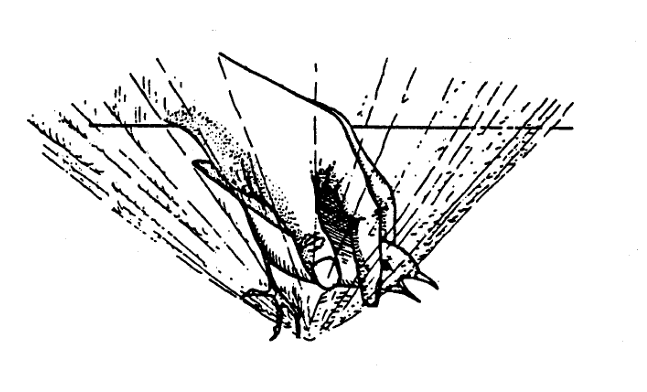
Bander's grip, no pressure over the keel, snug but no pressure around the neck
Stabilize the leg by pinching the intertarsal joint ('ankle') when applying a band
If the bird cannot be easily aged by plumage right off the bat (e.g. SPTO vivid plumage), skull the bird
Check BP/CP/Fat/Body Molt
Assess flight-feather molt and wear
Look within and between the feather tracts discussed in Pyle
Age and sex the bird based on your findings.
Weigh the bird, record wing cord
Release (assuming not stressed or having an injury worthy of hospital box)
The MAPS station is not for training. We absolutely should support each other and be curious, but bird safety is paramount. Holding on to birds unecessarily is bad for the bird and usually not required for the quality of the dataset.
It is ok to discuss briefly with your peers if:
You are truely unsure of age/sex AND
The discussion seems essential for aging/sexing AND
The bird is healthy and has not been captive (net to hand) for longer than 1h AND
There are few or no birds left to process
If you want to discuss something specific, it may be best to finish processing the bird and take a photo of the wing to look at later.


Comments